
Loading...
Serving Bremerton, WA and surrounding areas. (360) 287-4054
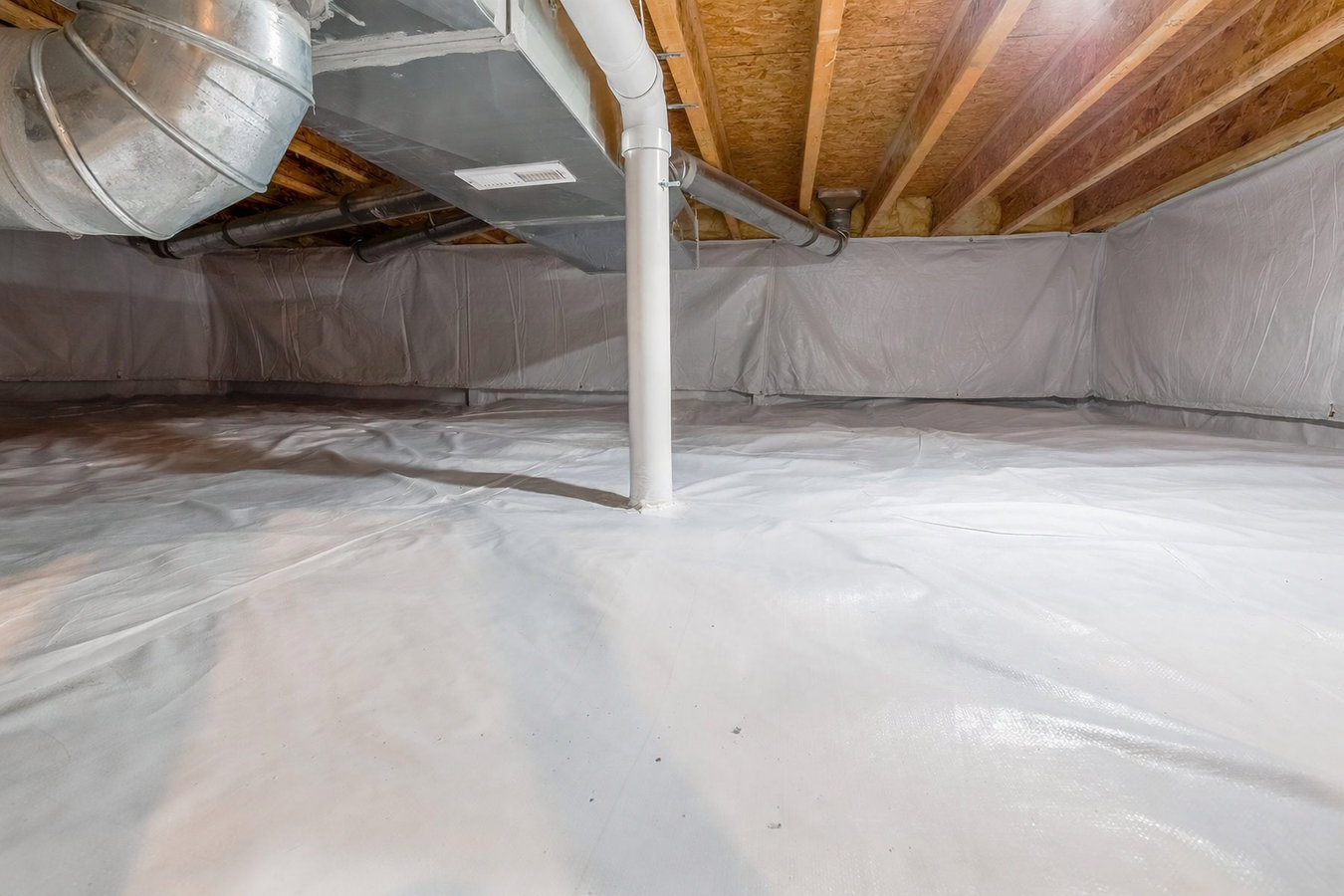
Bremerton gets heavy rain for months at a time. Without a vapor barrier, that moisture rises through your crawl space floor and into your home's framing. We install thick, properly sealed barriers that protect your floors and keep your home dry.
Crawl space vapor barrier installation in Bremerton involves laying thick plastic sheeting across your crawl space floor and sealing it up the foundation walls, blocking ground moisture from rising into your floor framing - most jobs take one day for an average home.
Bremerton averages around 55 inches of rain per year, and the soil under your home stays saturated for months. That constant moisture pressure works through an unprotected crawl space floor and into your subfloor, insulation, and joists - quietly causing damage you may not notice until floors start feeling soft or heating bills climb unexpectedly.
Many Bremerton homes built before the 1980s were constructed without any moisture protection in the crawl space, or with thin plastic that has long since degraded into brittle pieces. If you have noticed musty smells or soft spots in your floors, pairing a vapor barrier with crawl space insulation gives you both moisture control and thermal performance.
When moisture soaks into the wood framing under your floors for years, the wood weakens and loses its stiffness. If a spot gives a little when you walk across it, or feels different from the rest of the floor, moisture damage may already be happening below. In Bremerton's older neighborhoods, this is one of the most common signs that a crawl space has been wet for a long time.
A damp crawl space produces an earthy, stale odor that drifts up through gaps in the floor. You will notice it most after a heavy rainstorm or when the house has been closed up overnight. Bremerton's long wet season - October through April - means this smell can linger for months if the moisture source is not blocked.
Many Bremerton homes built before the 1980s have no vapor barrier at all, or have one that has degraded into torn, brittle pieces. If your home is more than 30 years old and no one has looked under it recently, there is a real chance the crawl space is unprotected. A quick look with a flashlight through the access hatch can tell you a lot.
Damp air under your home makes your heating system work harder. If your gas or electric bills feel out of proportion to your square footage during Bremerton's long heating season, moisture in the crawl space could be part of the reason. A properly sealed crawl space holds heat more efficiently and reduces the load on your furnace or heat pump.
We install heavy-duty plastic sheeting - typically 10 to 12 mils thick or reinforced - across the full crawl space floor, overlapping seams by at least a foot and taping each joint so moisture cannot sneak through the gaps. The barrier also runs up the foundation walls and is fastened in place so edges cannot peel away over time. If the crawl space has debris, standing water, or deteriorated old material, we clear that out first before the new barrier goes down.
For homes with significant moisture problems, we will walk you through the difference between a standard vapor barrier and full vapor barrier installation that includes wall coverage and vent sealing. Both approaches protect your home - the right one depends on how wet your crawl space is and what the brief assessment reveals.
Suits homes with a vented crawl space where the primary need is blocking soil moisture from rising through the floor.
Suits homes in wetter lots or with sloped ground where a thicker, more puncture-resistant material holds up better over time.
Suits older Bremerton homes where foundation walls have no moisture protection and moisture is entering from multiple directions.
Suits crawl spaces that have old deteriorated plastic, loose insulation, or debris that must be cleared before a new barrier can be installed properly.
Bremerton sits in one of the wettest parts of Washington State, with around 55 inches of annual rainfall and a wet season that runs nearly half the year. The combination of clay-heavy soils, hillside terrain, and limited sun means the ground under your home stays saturated for long stretches. Homes built during Bremerton's mid-century growth - in neighborhoods like Manette, Charleston, and East Bremerton - were often constructed before moisture management in crawl spaces was a standard practice. If your home is from that era, the odds are good that the crawl space has no real protection.
We work across Bremerton and the surrounding Kitsap Peninsula regularly, including Port Orchard and Belfair, where many of the same older housing conditions apply. The Puget Sound climate creates year-round ground moisture - not just a seasonal problem - which is why the contractors we work with typically recommend thicker barrier materials than what might be standard in drier parts of the country.
When you reach out, we ask a few basic questions - roughly how big your home is, whether you have noticed any smells or soft floors, and whether anyone has looked under the house recently. You will hear back within one business day.
A technician comes out and physically inspects the crawl space - measuring the area, checking any existing barrier, looking for moisture damage or standing water, and noting how easy the access is. This visit is free and takes about 30 to 60 minutes.
After the assessment you receive a written quote that breaks down what is included - removal of old material, barrier thickness, seaming method, and total cost. If mold or standing water was found, we explain whether that needs to be handled first and what it adds to the scope.
The crew clears debris, lays the new barrier, tapes every seam, and fastens the edges to the foundation walls. Most jobs finish in four to eight hours. Before leaving, we show you the finished work and answer any questions you have.
Free estimate. Written quote. No pressure. We reply within one business day.
(360) 287-4054Bremerton's hillside lots, older housing stock, and clay-heavy soils create crawl space conditions you do not find in drier parts of the state. We have worked in homes throughout Kitsap County and understand what the local climate and soil actually put these spaces through every winter.
A barrier that is not overlapped, taped, and fastened to the walls is not really doing its job. We install barriers the way building science recommends - full floor coverage, taped seams, wall coverage, and edges secured - so the installation holds up through Bremerton's wet seasons.
Every crawl space job starts with a free written estimate that lays out the scope before we begin. When the work is done, you get documentation of what was installed, so there is a clear record of the results on your home.
We show you what we find in the crawl space and explain what it means in plain language. If you do not need a full barrier replacement - if a repair will do the job - we will tell you that too. Our goal is a correct fix, not the biggest invoice.
Bremerton homeowners deal with more crawl space moisture than most people realize - the climate here is genuinely tough on homes. We bring the right materials, the right installation method, and honest advice so you get a barrier that actually holds up. The EPA's guidance on moisture and mold confirms that controlling ground moisture at the source is the most effective first step.
Comprehensive vapor barrier installation covering floors, walls, and vent sealing for homes with significant moisture problems.
Learn MoreInsulation installed in the crawl space to reduce heat loss through the floor and improve comfort throughout the home.
Learn MoreBremerton's wet season arrives fast - a vapor barrier installed now protects your floors and framing all winter. Call us or request a free estimate today.